
The first-ever bicycle was invented in Germany in 1817 by Karl Drais. It was a two-wheeled, self-propelled device, which he named a ‘Laufmaschine’ (running machine) and later renamed a velocipede. Drais took the first recorded ride on his Laufmaschine from Mannheim to Rheingau in June, 1817. The velocipede was also known as a draisienne (French) and later was called a hobby horse or dandy-horse.
The design of the Laufrad looked similar to a modern bike. The wheels were aligned behind each other. The person riding on the device sat on a seat and used his or her feet to push along the ground as in walking or running. This allowed people to move at a rate almost twice as fast as walking. The rider steered the bicycle with a handlebar attached to the front wheel. It was seen as an improvement over horse-drawn carriages and quickly became popular in German cities.
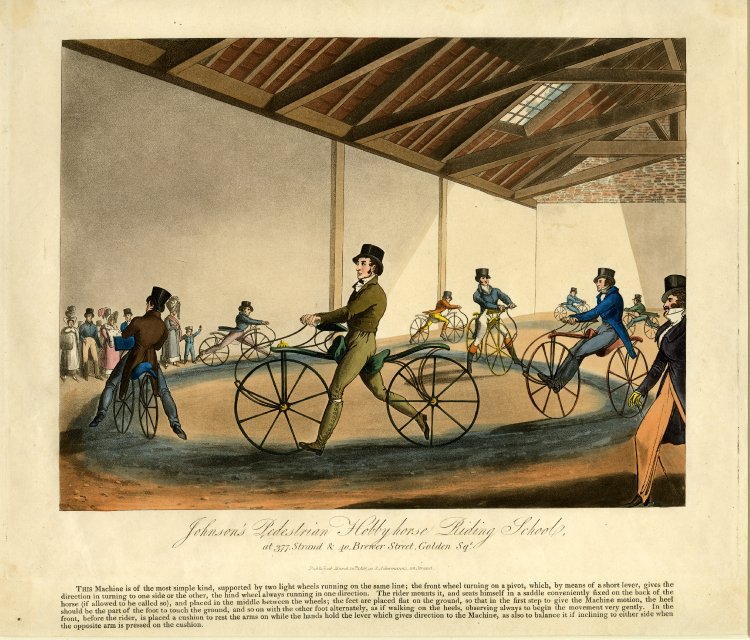
Laufrad, source: peabodyhsi.wordpress.com
The first citation of a Laufrad in America is attributed to Alexander Fisher in 1819, who wrote to his sister that it might be a more efficient transport alternative for women than riding side-saddle in long skirts.
The European Expansion
By 1819, Laufräder were being manufactured in France and London, where their design was refined and improved. For example, Englishman Denis Johnson invented a carved wooden frame to allow for larger wheels. The French added treadle-driven technology to the Laufrad by 1867. Soon high-wheeled bicycles, or penny farthings, were produced and meant that riders could go faster, but the bicycles were also more dangerous.
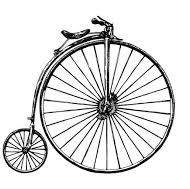
Penny farthing, source: iStock
To eliminate the instability at higher speeds, bicycles were eventually designed with two wheels of the same size. A chain-drive and four-sided frame emerged by 1888 and the bicycle by then already looked very similar to what we ride today.
By 1900 bicycles were mass-manufactured and prices came down. The public enthusiastically embraced this new means of transport and cycling clubs and races became very popular.
Cycling in Germany Since WWII
During the second world war, bicycle production came to an almost complete standstill in Germany. After the war was over production resumed and a million bicycles were produced in 1949. As cars became more available and affordable in the early 1960’s, consumers began to switch to this more efficient transport mode. Later the introduction of folding bikes and a youth bike called a Bonanza helped to revitalize sales that had fallen earlier in the decade.
Other political factors have since also affected the popularity of bicycles in Germany. The oil crisis of 1973 and the emergence of the Green Party made bicycles once again popular as a means of everyday transport. Increased emphasis on physical fitness also contributed to the trend.
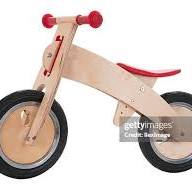
modern childrens’ Laufrad, source: Getty Images
Today lifestyle and popular culture in Germany includes bicycles at the forefront. Young families who live in inner cities use ‘Lastenräder’ (cargo bikes) to transport families and goods. Electrically-driven bikes with rechargeable batteries are hugely popular among adults and seniors. And young children still enjoy riding Laufräder before they are old enough to ride a proper two-wheeled bicycle.
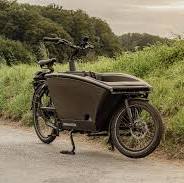
Cargobike, source: Unsplash
Sources:
www.peabodyhsiwordpress.com