
Who was Frederica Charlotte Louise Riedesel zu Eisenbach?
Frederica Charlotte Louise Riedesel (1746-1808) was a Prussian aristocrat. She married Friedrich Adolf Riedesel zu Eisenbach, also a German aristocrat, and Lieutenant Colonel in the German Army. She is famous for recording her experience following the troops in the war for American independence, which she experienced first-hand while her husband fought in support of the British during the Battle of Saratoga. ‘The Baroness’, as Charlotte became known, was a great support in tending to wounded British soldiers, sheltering community members after bomb attacks as well looking after the welfare of her own family, which included three young daughters at the time.
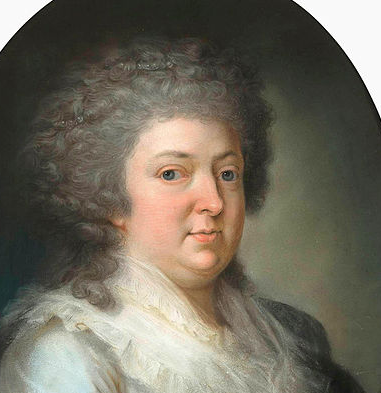
The ‘Baroness’, Source: Sarasota National Park website
The detailed diary of her experiences became one of the most important sources of information about what life was like during the war. Her accounts were published under the title ‘Baroness von Riedesel and the American Revolution, Journal and Correspondence of a Tour of Duty, 1776-1783’ and is still considered an important source for historians of the American Revolution and the 1777 campaign.
Women Who Followed the War Campaign
The internet source history.net reports that at the peak there were around 6,000 women who followed the war campaign in support of the British troops. The Muster rolls suggest that there were about 1,600 female war followers on the American side.
The ‘Baroness’ lived with aristocratic privileges while following the British troops. She travelled in a calash with her three children, had a lady servant, and ate well. Ordinary women who accompanied the British soldiers had no such privileges: they received only normal army rations and travelled by foot, carrying their possessions and children themselves.
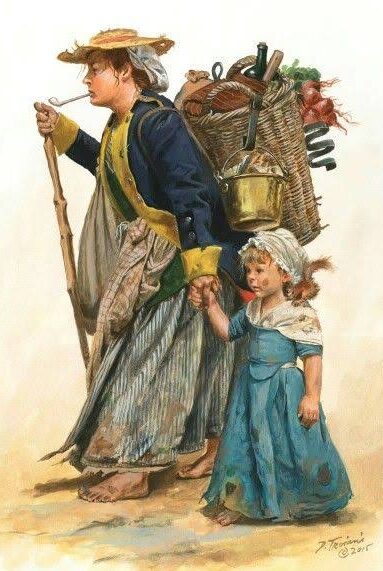
Source: Fort Montgomery State Historic Site Article in Facebook
Ordinary women following troops on both sides commonly handled the washing and assisted in field hospitals. They often worked as sutlers, selling commodities (primarily alcohol) to the ranks. Typically, each regiment had one sutler. To what degree they served as prostitutes is not documented. British soldiers were fighting far from home on longterm enlistments, so the supposition that prostitution was made available is logical.
En route, the female campaign followers clustered at the rear of the troops. During battles they stayed in the rearguard, but sometimes officers directed them to bring water to the soldiers. The most famous example on the American side is Molly ‘Pitcher’, who gained her name by replacing her collapsed husband at his cannon while distributing water to the troops.
Sources:
www.nps.gov (National Park Service)